Trip cost splitter
Add who's coming and what everyone paid for. See each person's fair share and the fewest payments it takes to settle up.


Add who's coming and what everyone paid for. See each person's fair share and the fewest payments it takes to settle up.
Who's on the trip
What you spent
Who pays whom
Costs split evenly between the people sharing them; odd cents go to the first names on the list, so it always adds up exactly. For planning only, not financial advice.
No names ticked means everyone shares it. Tick names to split between only them. Your trip stays on this device.
Not everyone does everything on a group trip. The splitter handles that with one rule:
In the example, the boat tour is split between the three who went and dinner between two, so Alex pays nothing toward the boat.
Planly Last Hurrah uses the same split rule for bachelor and bachelorette weekends, with a guest list, hour-by-hour itinerary, a settle-up tab, a budget per person and a dashboard. Planly Getaway and Planly Wanderlist cover bookings, a travel budget with a cost split, daily plans and packing lists for any trip.
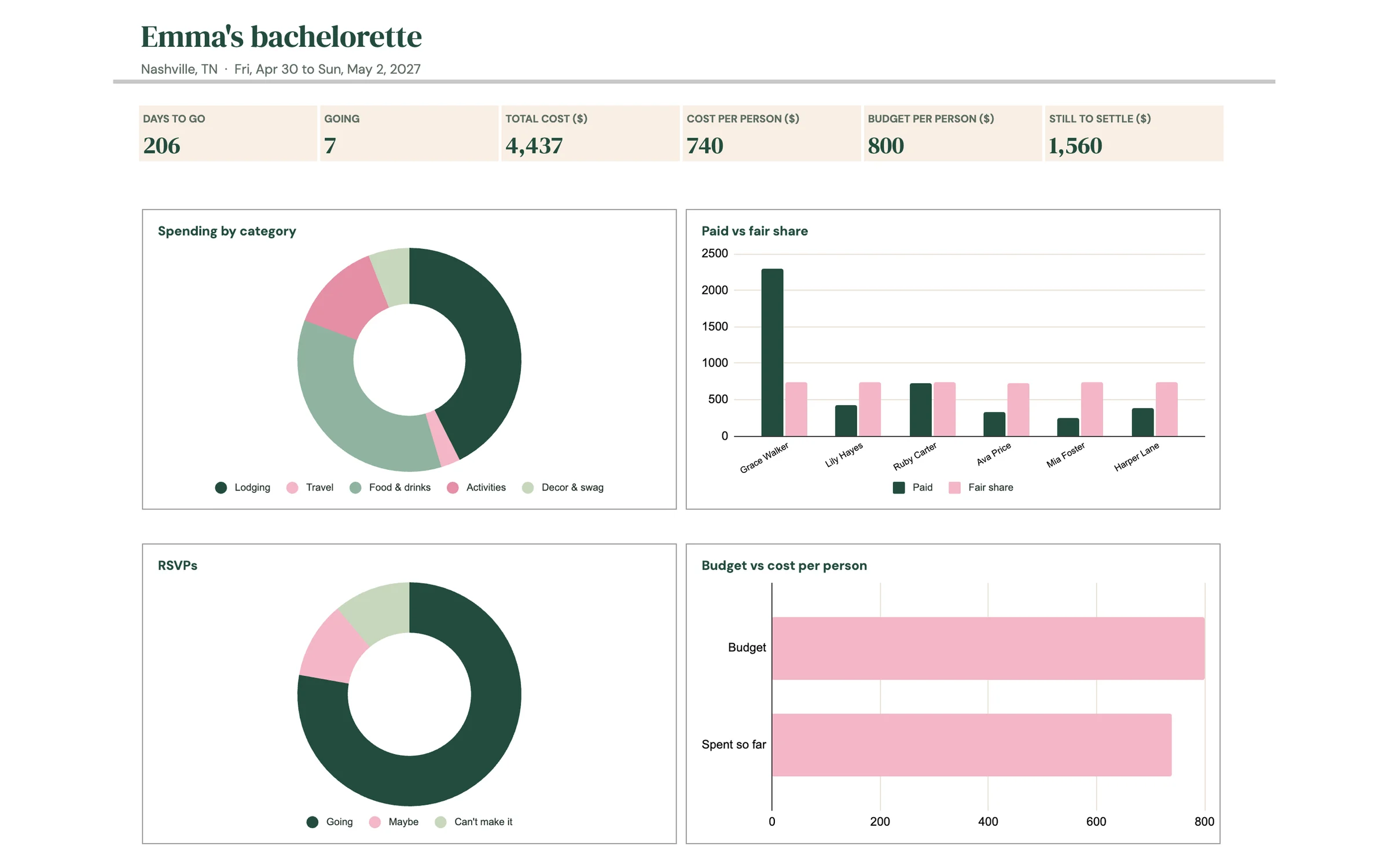
Plan the weekend, split the costs, skip the awkward money talk. A group trip planner for bachelor and bachelorette weekends: who's coming and when they arrive, an hour-by-hour itinerary, shared expenses split fairly between everyone chipping in, a settle-up tab and a packing list where shared items get one name. Set a budget per person and compare it with the real cost on a 4-chart dashboard, in the currency you choose.
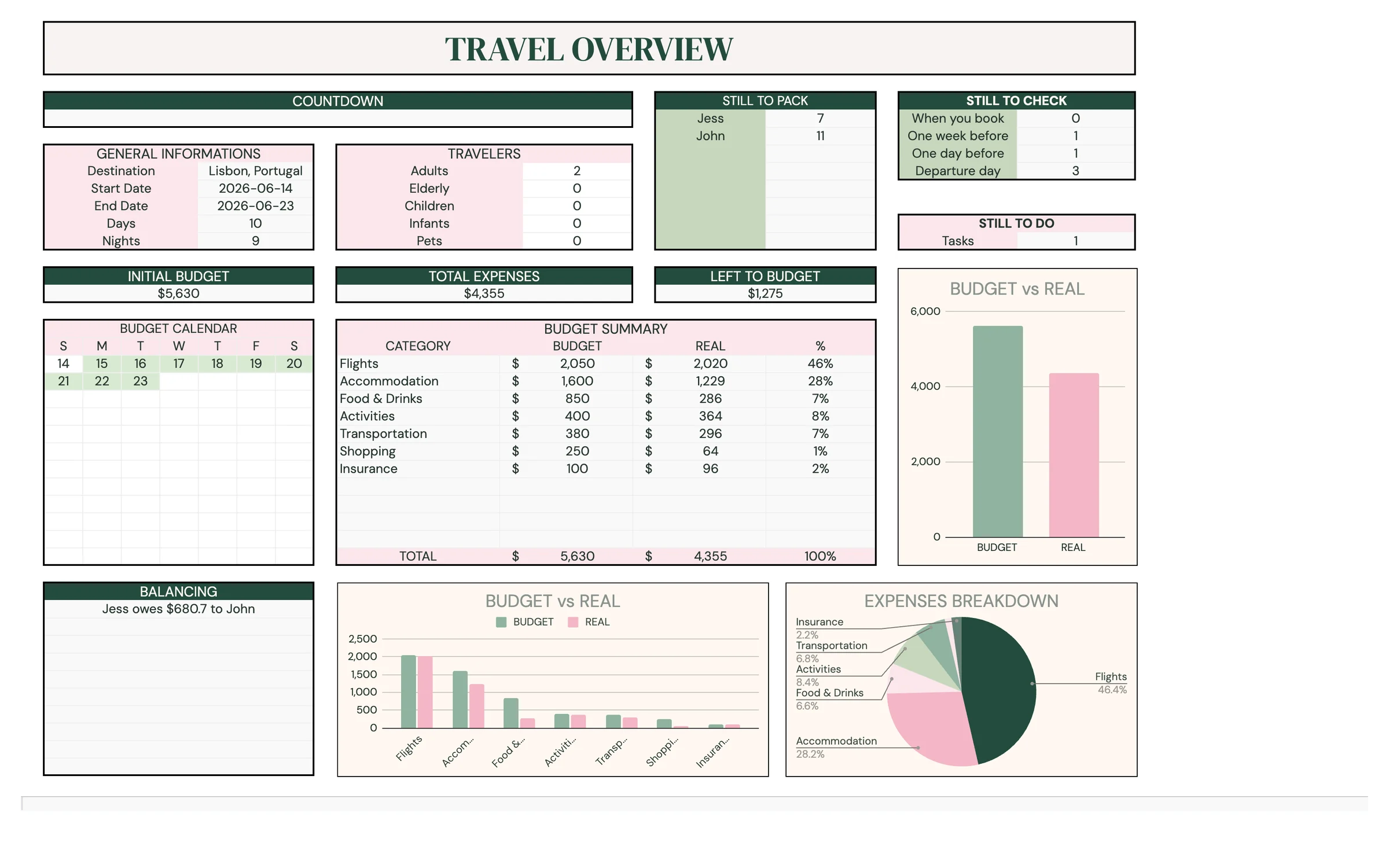
Everything for your next getaway, in one tab bar. A simple Google Sheets travel planner with bookings, a travel budget, cost split, daily itinerary, checklists and packing lists.
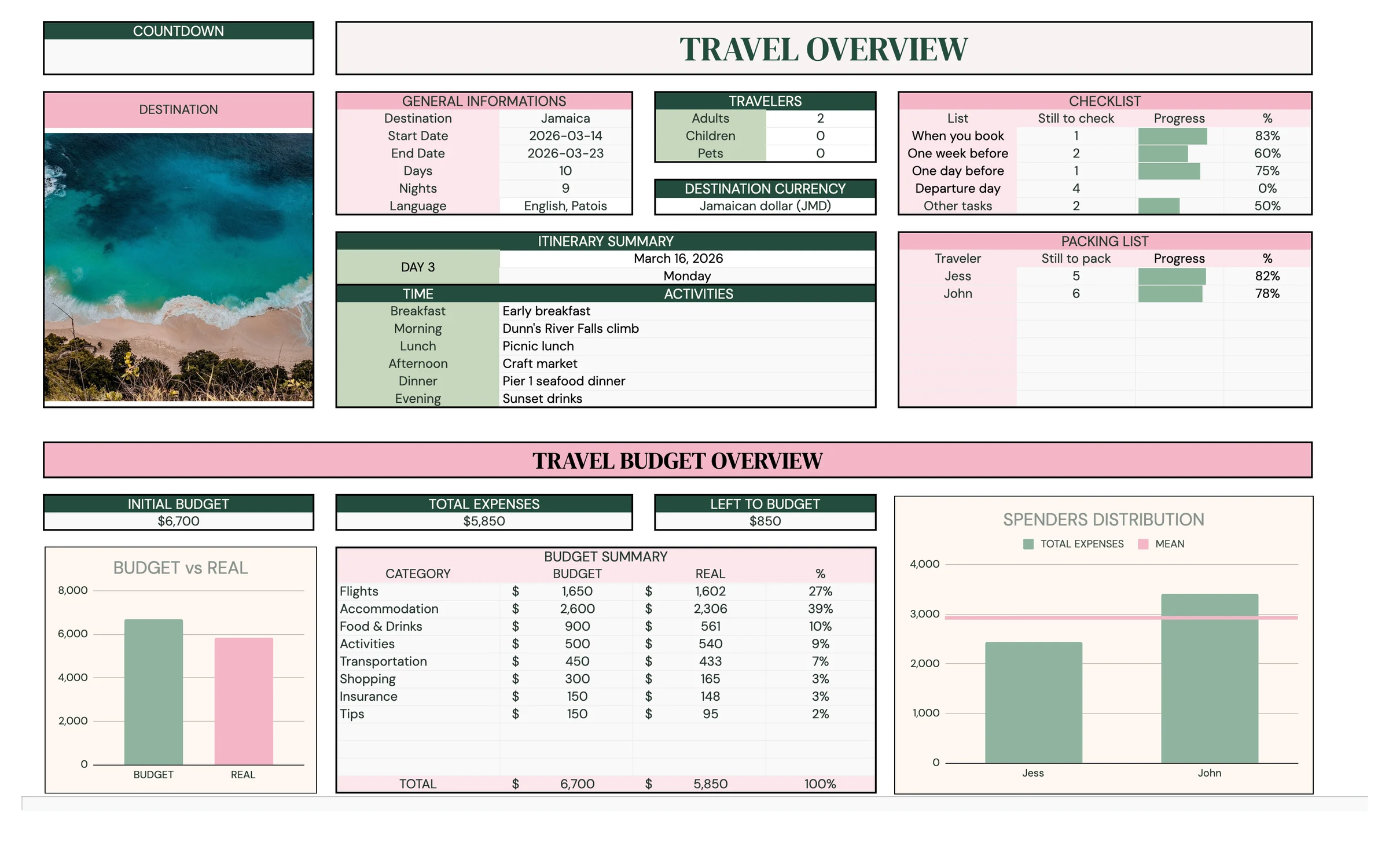
From daydream to boarding pass. The complete Google Sheets travel planner: destination research, flights, hotels, car rental, tours, insurance, a travel budget with spender split, daily itinerary, checklists and packing lists.
Tick the names of the people who share that expense. If nobody is ticked, it's split between everyone on the trip. So the house can be shared by all four of you while the boat tour is split between only the three who went.
Paid is everything that person put on their card. Fair share is their part of every expense they share in: the amount divided evenly between the people sharing it. Balance = paid − fair share. A negative balance means they owe money; a positive one means they get money back. All balances always add up to zero.
It matches the person who owes the most with the person who's owed the most, settles the smaller of the two amounts, and repeats. That way a group of 4 never needs more than 3 payments, and usually everyone owes one person.
Everything is worked out in whole cents. If $100 is split three ways, shares are $33.34, $33.33 and $33.33, with the extra cent going to whoever is first on the people list. That keeps the totals and the payments exact to the cent.
In the balance column, a pink 'Owes' pill means that person needs to pay money in, a green 'Gets back' pill means they're owed money, and a gray 'All square' pill means they're even. Next to each expense, a gray 'Everyone' chip means it's split between the whole group and a pink 'Only 2 of 4' chip means just the ticked people share it. A pink 'Pick who paid' note appears when an expense has no payer (for example after you remove a person), and that expense is left out until you choose one.
Only in your own browser on this device, so the trip is still there when you come back. Nothing is sent to us. Press Reset to start a new trip.