9 templates
The Money Bundle
Budget, pay off debt and grow your savings, all in one.
$33.99Save 55% vs. $75.91 separately


List your debts and what you can add each month. See when you'll be debt-free with the snowball and the avalanche, how much interest each costs, and which debt goes first.
Assumes interest is added monthly (APR / 12), rates stay the same, no new charges, and you keep paying the same total each month. Money freed up when a debt is paid off rolls to the next one. For planning only, not financial advice.
Your numbers stay on this device.
Both plans keep the same total payment every month. The only difference is which debt gets the extra money.
With the example numbers, the avalanche saves about $75 in interest, while the snowball clears the medical bill nine months sooner.
This calculator gives you a quick answer. Planly Debt Melt builds a month by month schedule and chart for up to 15 debts in Google Sheets, and lets you add one-off payments to see your date move closer. Planly Debt Countdown handles up to 25 debts with snowball, avalanche or your own order, a dashboard card for every debt, and balances you update as you pay them down. Both stay private in your own Google Drive.
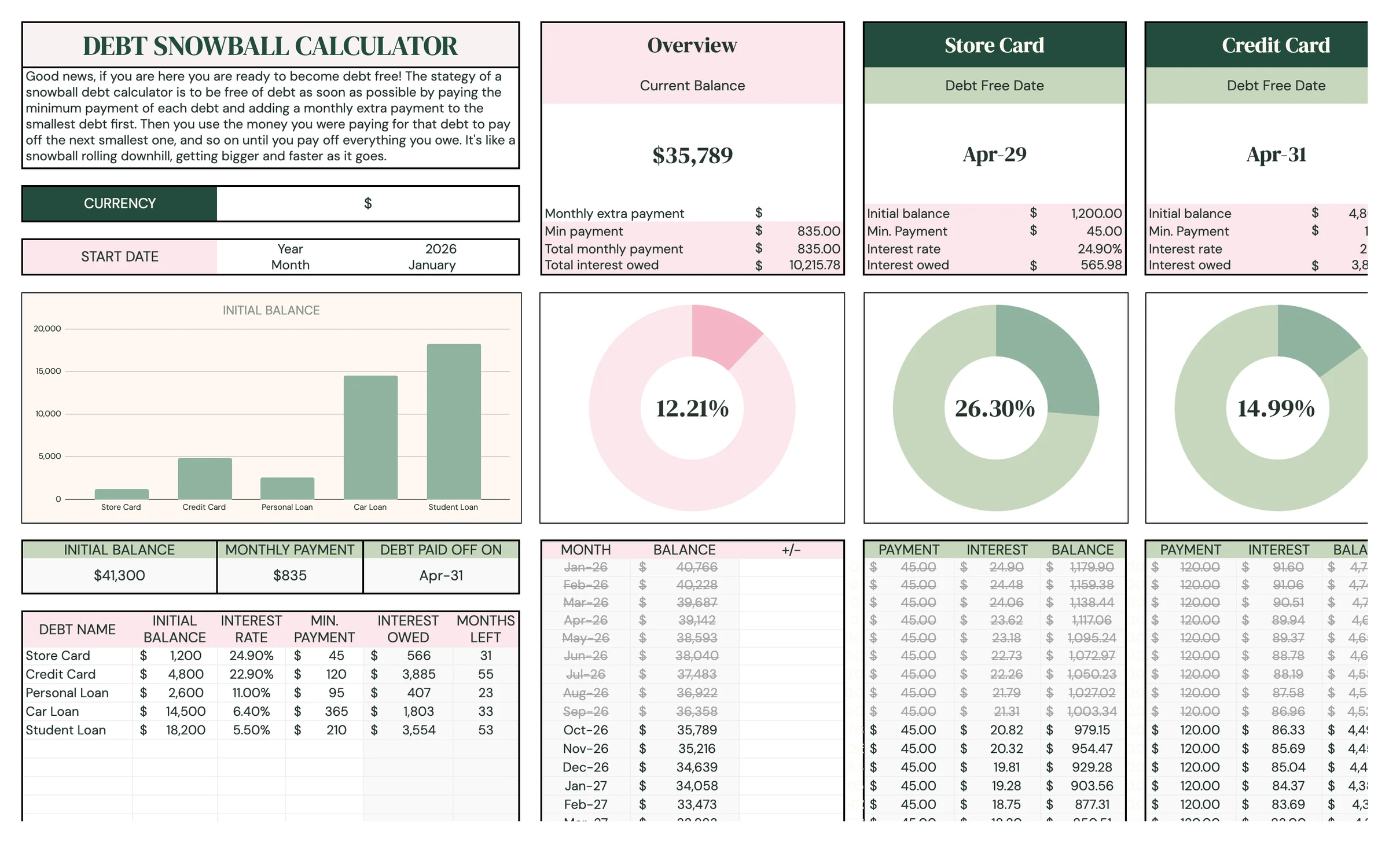
See your debt-free date, and move it closer. A Google Sheets debt snowball calculator for up to 15 debts that builds your payoff plan month by month and shows exactly when you'll be debt-free.
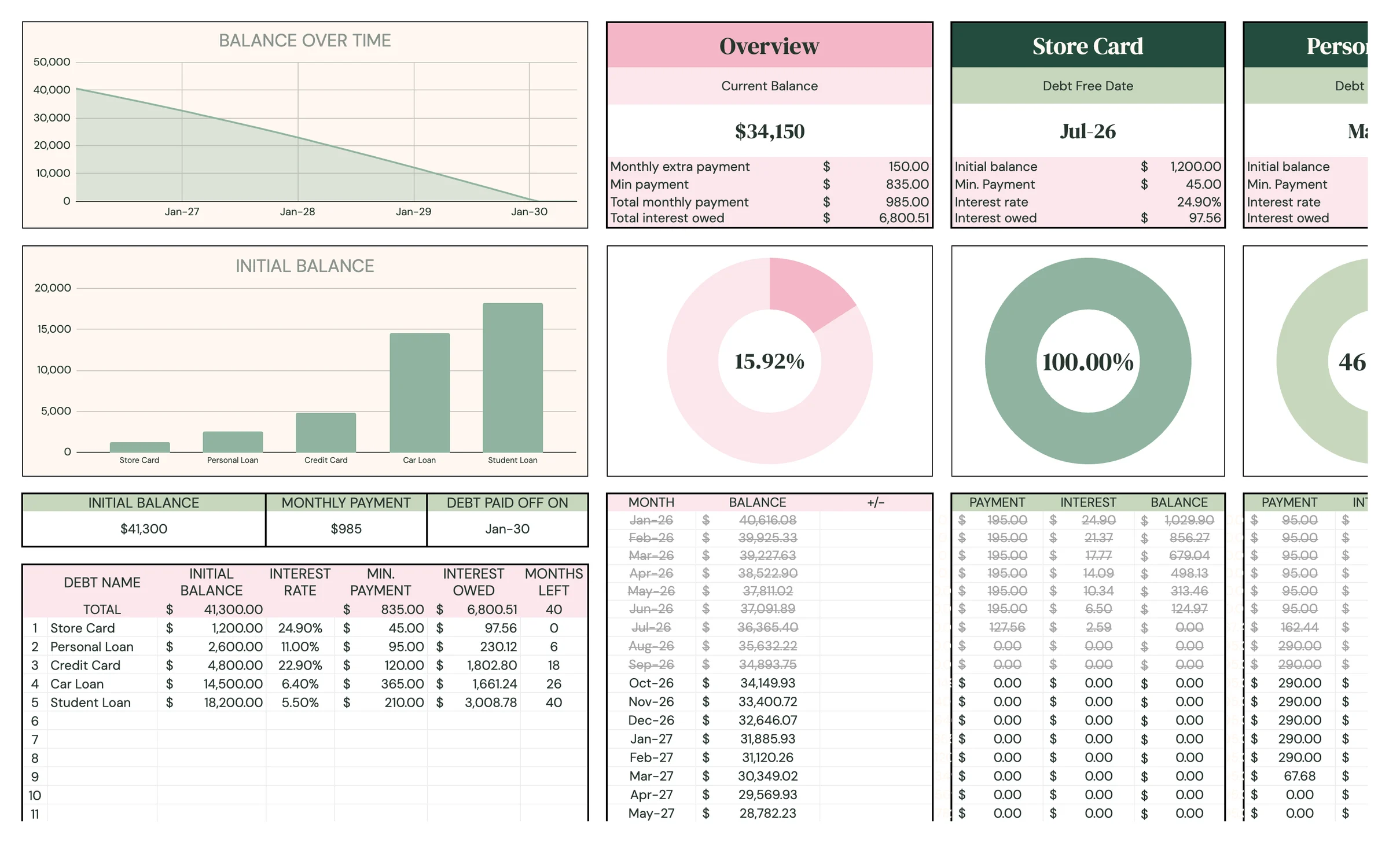
Your debt-free countdown, month by month. Plan your payoff across up to 25 debts in Google Sheets. Choose snowball, avalanche or your own order, add an extra monthly payment, and see a dashboard with every debt, a monthly schedule and your debt-free date.
Both debt templates plus budgets, sinking funds and a net worth tracker.
Budget, pay off debt and grow your savings, all in one.
Both pay the minimum on every debt and put any extra money on one target debt. The snowball targets the smallest balance first, so you clear whole debts sooner and see progress fast. The avalanche targets the highest interest rate first, which usually costs less interest overall. The calculator runs both with your numbers so you can see the real gap.
We simulate your debts one month at a time, starting next month. Each month, every balance grows by its APR divided by 12, every minimum gets paid, and your extra payment goes to the target debt. When a debt is paid off, its minimum rolls over to the next target, so the total you pay each month stays the same. The last payment on each debt is only what is left, never more.
Once a debt is gone, the minimum you used to pay on it doesn't disappear from your budget. It gets added to the payment on the next debt in line. That growing payment is what makes both methods speed up near the end.
If a minimum payment is smaller than the interest that debt adds each month, the balance never goes down on its own. The row turns pink with the exact interest amount. Your extra payment may still rescue it once it becomes the target, but if the total you pay can't keep up, we stop counting at 600 months (50 years) and tell you.
If the interest difference is small, the snowball's quick wins can help you stick with the plan. If the avalanche saves a lot, it may be worth the slower start. The green card with the Saves chip is the one that costs less interest with your numbers.
The method card with a green border and a Saves chip is the one that pays less total interest. If both cost about the same, neither is highlighted. A pink line under a debt means its minimum doesn't cover its monthly interest. A pink box above the results means the plan is still not finished after 50 years. The pink bars in the chart show your total balance month by month for the method you picked.
Only in your own browser on this device, so it's there when you come back. Nothing is sent to us. Use Reset to go back to the example numbers.